Opera production 2025
Light design, Assistant Director: Julian Pixel Schmiederer
Director: David Bösch
Conductor: Dennis Russell Davies
co-production: Ars Electronica, Brno Filharmonie, Landestheater Linz, Moravian Autumn Festival, University of Music and Performing Arts Vienna
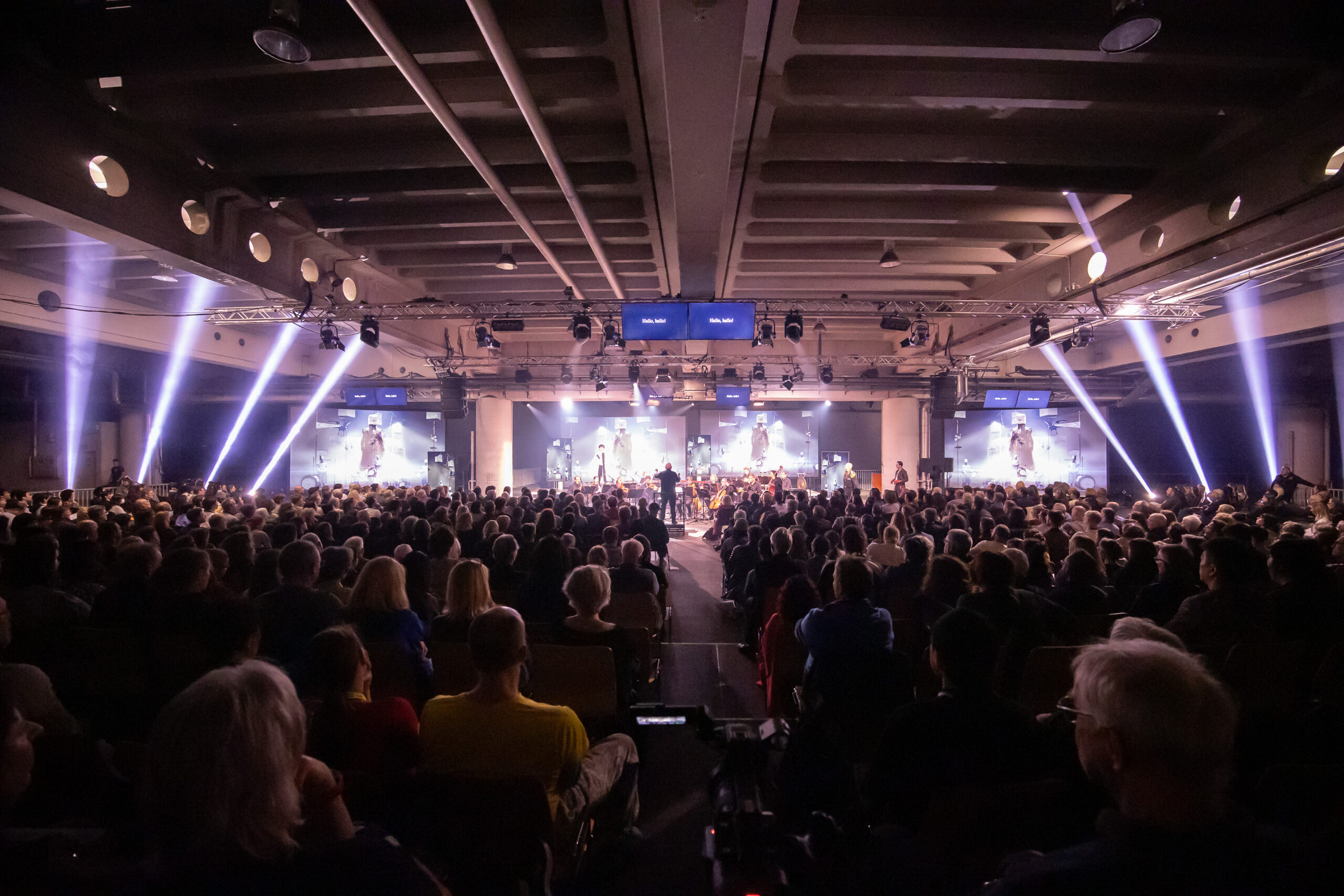
The chamber opera „Der Kaiser von Atlantis oder Die Tod-Verweigerung“ (The Emperor of Atlantis or Death’s Refusal), took center stage at the Ars Electronica Big Concert Night 2025, commemorating the 80th anniversary of the end of World War II. This production combined orchestral music with scenic visualization and light design.
The opera was created in 1943/44 by Viktor Ullmann and Peter Kien in the Theresienstadt concentration camp. In 1944 both artists were deported to Auschwitz (Oświęcim) and murdered there.
The visualization for The Emperor of Atlantis creates an expansive stage environment across eight video channels: four large rear projections and four portrait-format LED screens positioned among the performers. The visuals serve both as an atmospheric space and as a direct element of the action. Combined with intricate light design, the production extends beyond the stage into the industrial complex of “Postcity” in Linz.
Created entirely with generative AI systems, images produced from text prompts were developed into video sequences and synchronized live with the music and performance. The computer analyzes the music’s dynamics and rhythms, which influence the visuals in real time.
Rather than illustrating the plot directly, the visualization creates a metaphorical and symbolic layer of interpretation. An intensive dialogue about the opera, its historical context, and its musical motifs formed the basis of the creative process. Working closely with the AI systems was essential to move beyond stereotypical imagery and develop an independent visual world.
Photographs of the singers were used to give the virtual characters a visual resemblance—not as digital clones, but to create greater consistency. In total, around 6,500 source images and 1,800 video sequences were produced, of which just over 300 appear in the final performance.